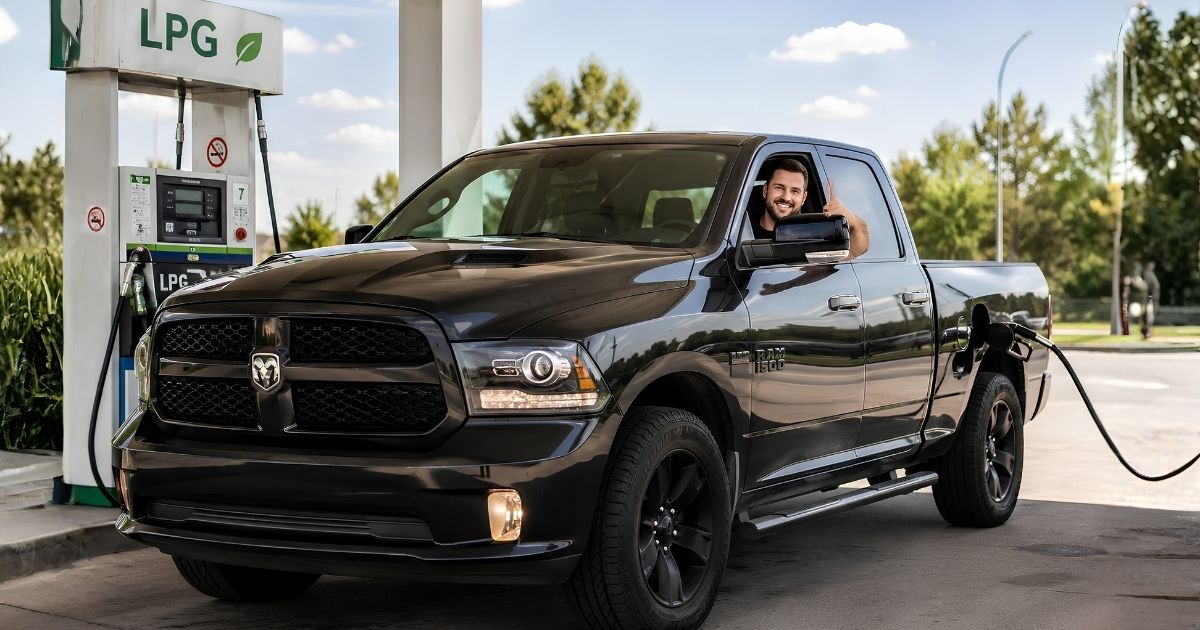

Installing an LPG system in a V8: Is LPG really worth it for RAM, F-150, Silverado & Co.?
LPG system in US cars: When autogas truly makes sense for RAM, F-150, Silverado, Tahoe & Co. – and why engine compatibility, tuning, and TÜV documentation are crucial.
For many US car drivers, a big V8 is simply a must-have.
The sound, the torque, and the relaxed driving are precisely what make Dodge RAM, Ford F-150, Chevrolet Silverado, GMC Sierra, Chevrolet Tahoe, Cadillac Escalade, Ford Mustang, or Chevrolet Camaro so appealing.
The only problem is:
A V8 drinks fuel.
Especially in everyday use, on longer journeys, or when towing, fuel costs can quickly become a pain. That's why many owners sooner or later ask the question:
Is an LPG system worthwhile for a V8?
The honest answer:
It depends.
An LPG system can be very beneficial for a V8. But it can also become expensive if the engine is not suitable, the system is poorly tuned, or if there are shortcomings in TÜV inspections, emissions reports, and registration.
What exactly is LPG?
LPG stands for Liquefied Petroleum Gas and is usually simply called autogas in Germany.
The vehicle continues to run with a gasoline engine but also has an installed gas system. The engine can then run on autogas depending on the system and operating condition. Gasoline remains in the vehicle, for example, for starting, switching, or, depending on the system, for additional blending.
LPG can be particularly interesting for large-displacement V8 engines because the price per liter of autogas is usually significantly lower than gasoline.
Why is LPG so popular for V8 US cars?
Many US vehicles have large naturally aspirated engines with relatively high fuel consumption.
Typical candidates are:
Dodge RAM 1500
Ford F-150
Chevrolet Silverado
GMC Sierra
Chevrolet Tahoe
Chevrolet Suburban
Cadillac Escalade
Jeep Grand Cherokee V8
Ford Mustang GT
Chevrolet Camaro SS
Corvette
For such vehicles, fuel costs can quickly become an issue in everyday life. Those who drive regularly, cover long distances, or use the vehicle for business purposes will sooner or later look at the costs per kilometer.
And this is where the biggest advantage of an LPG system lies.
Advantages of an LPG system in a V8
1. Significantly lower fuel costs
The biggest advantage is clear:
Autogas is generally cheaper than gasoline.
Even if consumption is higher when running on LPG, the cost per kilometer can still drop significantly. This becomes particularly interesting for vehicles with high gasoline consumption.
A RAM, F-150, or Silverado that consumes 15 to 20 liters of gasoline in everyday life naturally has a completely different savings potential than a small four-cylinder.
The more kilometers driven, the faster the conversion can pay for itself.
2. Drive a V8 without suffering at every fuel stop
Many people consciously buy a V8 for its driving feel, sound, and character.
An LPG system can help to use the vehicle more relaxed in everyday life, without directly thinking about gasoline costs with every drive.
This is particularly interesting for drivers who don't just use their US pickup on weekends but daily or regularly.
3. Long range due to two fuel systems
A converted vehicle still has the normal gasoline tank and an additional gas tank.
This can increase the total range.
This can be pleasant, especially on long journeys, trips, when towing, or at US car meetings. If no LPG is available, the vehicle simply continues to run on gasoline.
4. Good solution for older and simpler V8 engines
Many classic or older V8 engines are technically simpler than modern direct injection engines.
Robust naturally aspirated engines with appropriate valve and valve seat design can be well suited for LPG.
However, it is important to note:
Not every V8 is automatically gas-proof.
Engine compatibility must always be specifically checked.
5. Interesting for frequent drivers and commercial use
Those who drive many kilometers can particularly benefit from LPG.
This applies, for example, to:
US car drivers with everyday vehicles
Workshops with customer vehicles
Pickup drivers with trailers
Long-distance drivers
Commercial use
Vehicles with regular motorway driving
For low annual mileage, on the other hand, the conversion may pay off much later or not at all.
Disadvantages and risks of an LPG conversion
1. The conversion costs money upfront
A good LPG system is not a small accessory.
Depending on the vehicle, installation includes:
LPG system
Tank
Lines
Injectors
Vaporizer or suitable system components
Control unit
Installation
Tuning
Documentation
GSP / Inspection
Registration
For a V8, the effort is greater than for a small four-cylinder. More cylinders are supplied, tuning is more complex, and the system must match the engine power.
Those who only choose the cheapest offer often save in the wrong place.
2. Not every V8 is suitable for LPG
This is one of the most important points.
Some engines cope very well with LPG. Others react more sensitively, especially in the area of valves and valve seats.
Potential problems include:
soft valve seats
high thermal stress
incorrect tuning
too lean operation
missing additive for sensitive engines
high continuous load
poor maintenance condition
An engine that already does not run smoothly on gasoline will not get better with an LPG system.
On the contrary:
Misfires, old ignition coils, weak spark plugs, false air, or lambda problems can become even more noticeable when running on gas.
3. More maintenance and additional technology
An LPG system is another technical system in the vehicle.
This means:
Filters must be changed.
The system must be inspected.
The tuning should remain clean.
Injectors, vaporizers, and sensors can age.
In case of malfunctions, a workshop with LPG experience is needed.
Especially with US vehicles, not every workshop is automatically proficient in V8s, US electronics, and LPG systems.
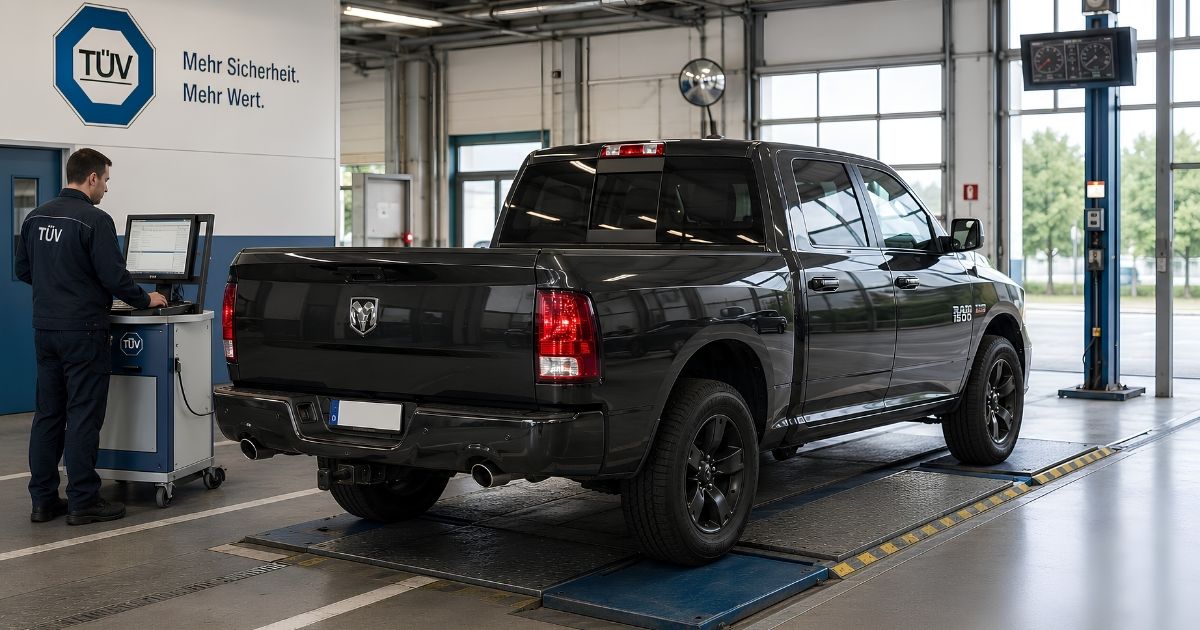
4. TÜV, GSP, GAP and registration must fit perfectly
An LPG system must be legally installed and inspected.
Important depending on the vehicle and system:
ECE-R115 documents
Emissions report or individual emissions certificate
Gas system installation inspection
Entry in the vehicle documents
Gas system inspection as part of the main inspection
Correct documentation of components
This is where it often gets exciting with US imports.
Because not every vehicle can be cleanly mapped in German databases. Import model, year of manufacture, engine code, emission standard, and VIN must match.
If documents are missing or the system has not been installed properly, there can be problems with registration or later with the main inspection.
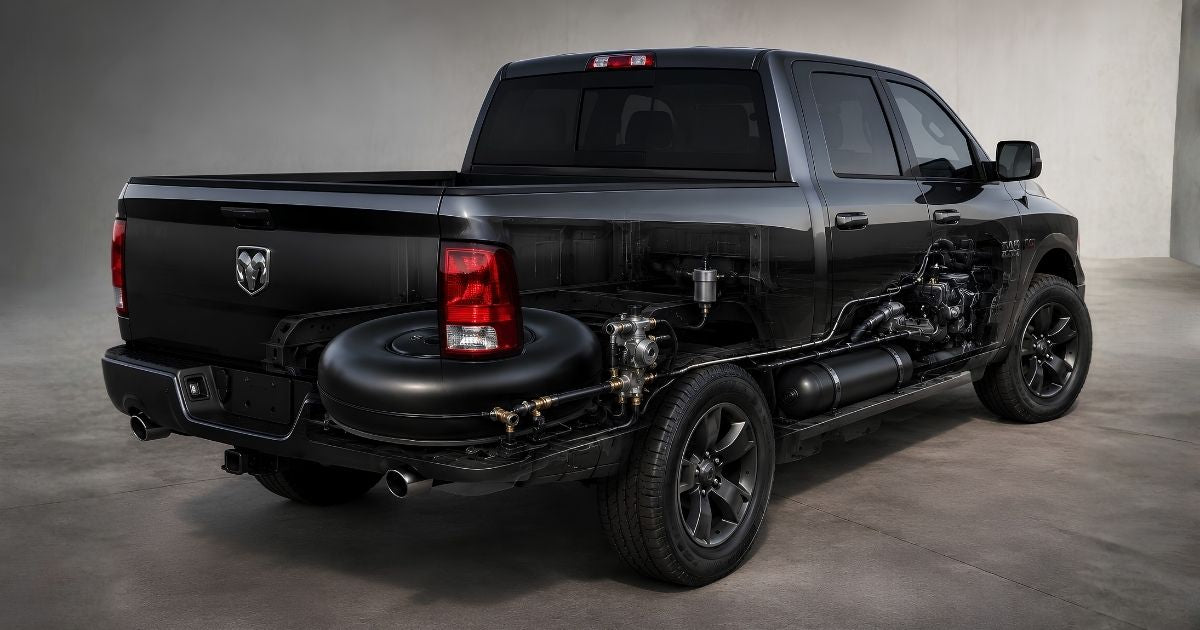
5. Loss of space due to the gas tank
The LPG tank needs space.
Depending on the vehicle, it can be installed as a:
Spare wheel well tank
Underfloor tank
Cylindrical tank
Tank in the cargo area
For pickups, SUVs, and vans, it must be clarified in advance what is technically and practically sensible.
A large tank offers range but costs space and weight.
6. Not all modern technology is uncomplicated
Modern V8 engines are often more complex than older naturally aspirated engines.
Topics such as direct injection, cylinder deactivation, turbochargers, hybrid support, or very sensitive engine controls do not make LPG impossible, but more demanding.
Sometimes gasoline is still mixed in during gas operation to protect components or to operate the injection technology correctly.
This reduces savings but may be technically necessary.
When is an LPG system worthwhile for a V8?
An LPG conversion can be worthwhile if:
you drive many kilometers
your V8 has high gasoline consumption
the engine is suitable for LPG
the vehicle is to be kept long-term
the system is cleanly tuned
an experienced converter performs the installation
all documents for TÜV and registration are available
It is rather not worthwhile if:
you drive very little
you want to sell the vehicle soon
the engine is not gas-proof
technical problems already exist
you are only looking for the cheapest conversion offer
clean registration is not possible
you don't have a good LPG workshop nearby
Common question: Does LPG destroy the V8?
Not automatically.
A well-installed and cleanly tuned LPG system can function for a long time in a suitable engine.
Problems usually arise from:
wrong system
poor tuning
too lean running
lack of maintenance
unsuitable engine
wrong spark plugs
defective ignition system
continuous load without suitable design
missing documentation
Especially with V8 engines, it should be checked before a conversion whether the specific engine is known to be LPG-compatible.
Important:
Don't ask "Dodge RAM LPG yes or no," but rather about the engine, year of manufacture, engine code, emission standard, and vehicle configuration.
Why VIN inspection is also important for LPG
One RAM is not like another RAM.
One F-150 is not like another F-150.
Especially with US vehicles, there are big differences depending on the year of manufacture, market, engine, and equipment.
The VIN helps with the exact assignment of:
Engine
Year of manufacture
Model variant
Emission standard
US or export version
Technical equipment
Spare parts
Relevant engine components
This is important when it comes to engine compatibility, spare parts, ignition, sensors, or later repairs.
Replace the gas system or repair the old LPG system?
Many US cars arrive in Germany with an older gas system or were converted years ago.
Then the question often arises:
Repair or completely replace?
A replacement can be useful if:
the system is outdated
no spare parts are available anymore
documentation is missing
tuning is poor
errors occur repeatedly
tank or components are no longer verifiable
registration is unclear
A repair can be useful if:
the system is high-quality
documents are available
spare parts are available
the installation was done properly
only individual components are defective
Especially with old LPG systems, one should not just clear the error, but check the entire system.
Common mistakes with LPG in V8s
The most common mistakes from practice:
chosen too cheap a conversion
engine compatibility not checked
system not designed for the performance
poor tuning
no clean documentation
ignition system not renewed beforehand
engine problems ignored
wrong workshop chosen
no regular maintenance
TÜV issue clarified only after installation
Especially with a V8:
If the system does not work properly, it can get expensive.
Our conclusion: LPG in a V8 can be powerful – but only with proper planning
An LPG system can make absolute sense for a V8 US car.
Especially for Dodge RAM, Ford F-150, Chevrolet Silverado, GMC Sierra, Tahoe, Suburban, or Escalade, LPG can make running costs significantly more pleasant.
But:
LPG is not simple plug-and-play tuning.
It's about engine compatibility, tuning, registration, maintenance, and reliable parts supply.
Those who plan professionally can save a lot of money and drive their V8 more relaxed.
Those who convert cheaply risk trouble with the engine, TÜV, and their wallet.
Do you have questions about LPG, V8 engines, or spare parts?
Do you drive a RAM, F-150, Silverado, Sierra, Tahoe, Mustang, Camaro, or another US vehicle with a V8?
Then feel free to send us your VIN / chassis number and your question about the vehicle.
We help you with suitable spare parts, ignition components, sensors, engine parts, gaskets, injection parts, and other US parts for your vehicle.
US-Parts24 – Simply inquire about US car parts via VIN.